Braj 84 Kos Yatra
Braj 84 Kos Yatra β
The Sacred Pilgrimage
of a Lifetime
The Braj 84 Kos Yatra is not merely a pilgrimage β it is a complete spiritual transformation. A 252-kilometre circumambulation of the entire sacred land of Braj Bhoomi, covering more than 1,000 sacred sites where Lord Krishna performed His divine leelas. For those who complete it, the Yatra is said to grant liberation itself.
The Most Sacred Walk on Earth
In all of the vast spiritual geography of India β a land that has produced more sacred sites, pilgrimage routes and holy journeys than perhaps any other civilisation on earth β the Braj 84 Kos Yatra stands in a category entirely its own. It is a pilgrimage that encompasses an entire sacred universe: a 252-kilometre circular route through the divine land of Braj Bhoomi in Uttar Pradesh, taking the pilgrim through every significant place where Lord Sri Krishna performed His eternal pastimes more than 5,000 years ago.
The number 84 is deeply significant in Hindu cosmology β it represents the 8.4 million life forms (yonis) that a soul must pass through in its cycle of birth and death before attaining human form. By completing the 84 Kos Parikrama, the devotee symbolically transcends all 8.4 million forms of existence and moves toward liberation. The Braj Chaurasi Kos (the traditional name) is thus considered the most comprehensive act of devotional surrender a Vaishnava pilgrim can perform.
Unlike the Govardhan Parikrama (21 km, one day) or the Vrindavan Parikrama (11 km, a few hours), the 84 Kos Yatra is an undertaking that demands real commitment β traditionally done on foot over 30β40 days, though modern arrangements allow a vehicular completion in 5β7 days. It covers not just the famous towns of Vrindavan and Mathura, but the entire sacred landscape of Braj β remote villages, quiet forests, ancient kunds, small hillocks and forgotten temples that together form the complete canvas of Krishna’s divine childhood.
The Ancient Origins of the 84 Kos Yatra
The scriptural basis for the Braj 84 Kos Yatra is found in ancient texts including the Varaha Purana, the Padma Purana and the Adi Varaha Purana, where Lord Varaha (an incarnation of Vishnu) himself describes the glories of Braj Bhoomi and the merit of performing its Parikrama. The Varaha Purana specifically mentions that a person who undertakes the 84 Kos Parikrama of Braj with devotion and faith earns merit equivalent to performing thousands of yagnas and pilgrimages to all other tirthas combined.
Historically, the organised practice of the 84 Kos Yatra is closely associated with the Vallabha Sampradaya (the tradition founded by Sri Vallabhacharya in the 15thβ16th century CE) and the Gaudiya Vaishnava tradition established by Sri Chaitanya Mahaprabhu. The Six Goswamis of Vrindavan β who were sent by Chaitanya Mahaprabhu to excavate and re-establish the sacred places of Braj β undertook this Parikrama regularly as part of their devotional practice.
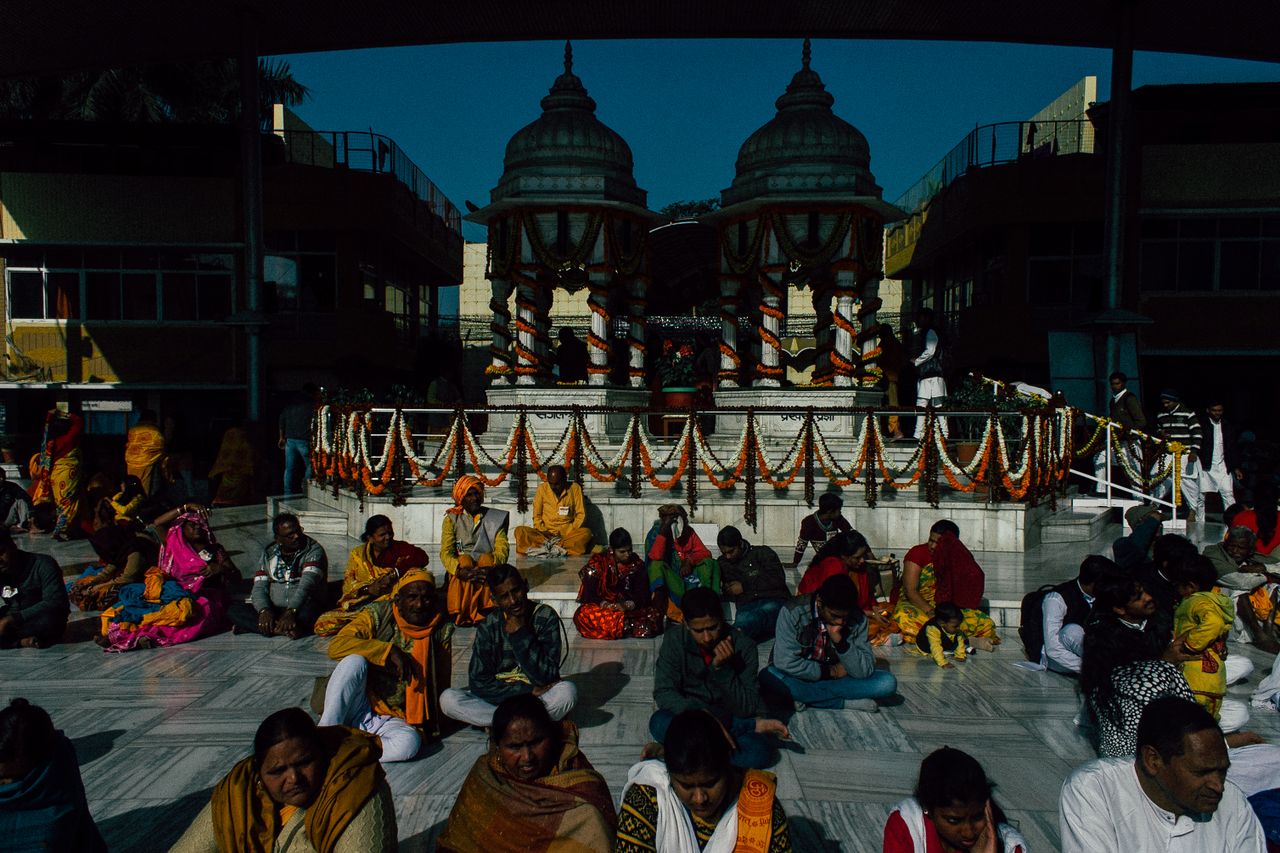
The Yatra has been performed continuously by hundreds of thousands of pilgrims every year for at least 500 recorded years. The most popular time for the Yatra is during the sacred month of Kartik (OctoberβNovember), which is considered the holiest month in Braj Dham, and during the Akshaya Tritiya festival (AprilβMay). The sight of thousands of pilgrims walking barefoot through the Braj countryside, singing devotional songs and chanting the name of Krishna, is one of the most moving human experiences one can witness in India.
“One who circumambulates Braj Mandal even once, with devotion and faith, attains the full result of performing the Ashwamedha sacrifice a thousand times and achieves the abode of Vishnu.”
β Varaha Purana, Braj MahatmyaThe Complete Parikrama Route
The Braj 84 Kos Parikrama route traces a great circle around the entire Braj Mandal β beginning and traditionally ending at Mathura, the birthplace of Lord Krishna. The route moves through all the major and minor towns, villages, kunds, ghats, forests and hills of Braj, touching every significant place where Krishna’s divine pastimes occurred.
The traditional foot Parikrama covers approximately 252 km (84 Kos Γ 3 km per Kos) and takes 30β40 days walking at a gentle pilgrim’s pace of 6β8 km per day. The vehicular Parikrama covers the same route in 5β7 days with stops at all major sacred sites. Below is the traditional stage-by-stage breakdown of the Yatra.
Mathura β The Divine Starting Point
Starting Point Β· Krishna JanmabhoomiThe Yatra traditionally begins with darshan at Krishna Janmabhoomi β the exact birthplace of Lord Krishna. Pilgrims offer prayers, take a holy snan at Vishram Ghat on the Yamuna (where Krishna rested after slaying Kansa), and seek blessings at Dwarkadheesh Temple before setting out on the circumambulation. A small puja and sankalp (sacred vow) ceremony marks the formal beginning of the Yatra.
Vrindavan β Heart of the Yatra
~15 km from MathuraFrom Mathura, the route enters the sacred forests of Vrindavan β the playground of Krishna’s youth. Pilgrims take darshan at Banke Bihari Mandir, Radha Raman Mandir, ISKCON, Madan Mohan, Govind Dev Ji and other major temples. The Keshi Ghat evening Yamuna Aarti is attended before moving on. Vrindavan is also home to Nidhivan, Seva Kunj and countless other leela sthals of the divine couple.
Gokul, Mahavan & Brahmand Ghat
~20 km from VrindavanThe route crosses the Yamuna to reach Gokul β the village where baby Krishna was taken on the night of His birth and where He spent His earliest years. Nand Bhavan (Yashoda Maiya’s home), Raman Reti (the sacred sand where baby Krishna played), and Brahmand Ghat (where Krishna showed the entire universe to Yashoda inside His mouth) are visited. Nearby Mahavan has the Dauji Temple dedicated to Lord Balarama.
Govardhan Hill & Sacred Kunds
~25 km from MathuraGovardhan Hill β the sacred mountain that Lord Krishna lifted on His little finger to protect the people of Braj from Indra’s devastating rain. The 21 km Govardhan Parikrama is a Yatra within the Yatra β pilgrims walk (or ride) around the entire hill, stopping at Manasi Ganga, Govind Kund, Dan Ghati, Mukharvind (the mouth of Govardhan), Punchari Ka Lota, and the twin kunds of Radha Kund and Shyam Kund β considered the most sacred water bodies in all of Braj.
Barsana β Radha Rani’s Sacred Town
~45 km from MathuraThe divine birthplace of Srimati Radha Rani β the eternal consort of Lord Krishna and the embodiment of divine love itself. The hilltop Shri Radha Rani Temple (Shri Ji Mandir), perched atop four connected hills, is one of the most beautiful temples in all of Braj. Pilgrims climb the 200+ steps for darshan of the beloved Kishori Ji. Barsana is also home to Mor Kutir, Pili Pokhar, and many other leela sthals associated with the divine couple.
Nandgaon β Krishna’s Foster Father’s Village
~50 km from MathuraThe home of Nanda Baba and Yashoda Maiya β Krishna’s beloved foster parents. The temple atop Nandishwar Parvat offers a panoramic view of the entire Braj countryside. Nandgaon is inextricably linked with Barsana in the lore of Braj β Krishna would visit Radha in Barsana, and this divine interaction between Nandgaon and Barsana is the subject of countless songs, paintings and the famous Lathmar Holi festival.
Kokilavan, Sheshashahi & Sacred Forests
Northern Braj CircuitThe northern arc of the Yatra passes through the sacred forests of Kokilavan (where Krishna appeared as a cuckoo bird to trick Radha Rani), Kotvan, Shanthanu Kund, Sheshashahi (where Balarama took rest on the coils of Sheshanaga), and numerous small, ancient temples and kunds that are rarely visited except by serious pilgrims on the 84 Kos circuit.
Kamyavan & Vrinddavan Forest
~60β70 km from MathuraKamyavan is one of the 12 sacred forests (dvadasha vanas) of Braj and is considered particularly powerful for fulfilling the wishes (kama) of sincere devotees. The Kameshwar Mahadev Temple here β a Shiva shrine with a 5,000-year history β is especially significant. The ancient forests of Braj, though much diminished from their former extent, still carry a palpable spiritual vibration in places like Kamyavan.
Dig, Kaman & Western Braj
Western Arc of the CircuitThe western portion of the 84 Kos circuit passes through Dig (home to the famous Jai Singh palace and temples), Kaman (one of the oldest towns in Braj), Bayana and several other ancient towns and villages with their own connections to Krishna’s leelas. This section is less travelled by modern pilgrims but is deeply sacred in the traditional Yatra.
Return to Mathura β Completion
End Point Β· Full CircleThe Yatra completes its great circle by returning to Mathura β back to the Vishram Ghat and Krishna Janmabhoomi where it began. A final darshan, a sacred snan in the Yamuna, and a puja of completion mark the end of this extraordinary journey. Many pilgrims experience profound emotion at this moment β tears of gratitude, a sense of completeness, and an indescribable peace that the Yatra leaves within.
“Braj Bhoomi is not a place β it is a state of consciousness. Those who walk its sacred earth with devotion do not merely see the land of Krishna; they become part of His eternal leela.”
β Braj Mahatmya, Padma Purana

The Twelve Sacred Forests of Braj
One of the most extraordinary aspects of the 84 Kos Yatra is that it passes through all twelve sacred forests (Dvadasha Vanas) of Braj Bhoomi β ancient woodland groves where Lord Krishna performed specific divine leelas, each with its own devotional significance and spiritual energy. These twelve forests are mentioned in the ancient Puranas and have been considered sacred for thousands of years.
| Forest (Vana) | Location | Associated Leela |
|---|---|---|
| Madhuvana | Near Mathura | Where Shatrughna (brother of Lord Ram) slew the demon Lavana. One of the oldest forests of Braj. |
| Talavana | Near Gokul | Where Krishna slew the demon Dhenuka (disguised as a donkey) with the help of Balarama. |
| Kumudavana | Near Govardhan | Named for the beautiful kumuda (water lily) flowers that bloom here. Associated with Radha’s leelas. |
| Bahulawana | Near Govardhan | Where a cow named Bahula encountered a tiger and was saved by her devotion β teaching the virtue of compassion. |
| Kamyavana | SW of Govardhan | Where Krishna fulfilled the wishes (kama) of His devotees. Famous for the Kameshwar Mahadev Shiva temple. |
| Khadirwana | Near Govardhan | Named for the khadira (acacia) trees. Associated with the Charana Pahari β the footprint of Lord Krishna on a stone. |
| Vrindavana | Vrindavan town | The most celebrated forest β where Radha-Krishna performed the eternal Raas Lila. At the heart of Braj Dham. |
| Bhadravana | Near Vrindavan | Where Krishna performed many pastimes with the gopis. Home to the ancient Bhadreshwar Mahadev temple. |
| Lohavana | Near Mathura | Where Krishna slew the demon Lohajangha. One of the first places Krishna visited after leaving Gokul for Vrindavan. |
| Mahavana | Gokul Mahavan | Krishna’s earliest childhood home β where Yashoda Maiya performed the first naming ceremony and other baby leelas. |
| Belgrama / Belwana | Near Govardhan | Named for the bel (wood apple) trees. Associated with many divine pastimes including the lifting of Govardhan Hill. |
| Bhandirwana | Near Vrindavan | Where Balarama performed His own Raas Lila with the gopis. The ancient banyan (bandhir) tree here is considered sacred. |
Key Leela Sthals on the 84 Kos Route
Govardhan Hill β The Most Sacred Place in Braj
Of all the sacred places encountered on the 84 Kos Yatra, Govardhan Hill holds a special position of honour. Lord Krishna declared that He Himself is identical with Govardhan Hill β and thus the Govardhan Parikrama (circumambulation of the hill) is considered equivalent to direct service to Krishna. Pilgrims on the 84 Kos Yatra invariably perform the 21-km Govardhan Parikrama as part of their circuit, stopping at the twin kunds of Radha Kund and Shyam Kund for a holy bath β an act considered the most purifying possible for a Vaishnava devotee.
Radha Kund & Shyam Kund β The Crown Jewel of Braj
Radha Kund and Shyam Kund β the two sacred ponds at the foot of Govardhan Hill β are considered the holiest water bodies in all of Braj Dham by Vaishnava tradition. Sri Chaitanya Mahaprabhu wept with joy when He first saw Radha Kund, and the great Goswamis of Vrindavan performed their most intense bhajans on its banks. A bath in Radha Kund on Kartik Ashtami (the night of Bahulastami) is said to bestow the same spiritual merit as the entire 84 Kos Yatra in a single act of devotion.
The Sacred Kunds of Braj
Throughout the 252-kilometre route of the 84 Kos Yatra, the pilgrim encounters dozens of ancient kunds β sacred ponds or lakes connected to specific leelas of Krishna. Each kund has its own story, its own presiding deity, and its own unique spiritual merit for the devotee who bathes in it or offers prayers on its banks. Some of the most important kunds visited on the Yatra include Manasi Ganga (Govardhan), Govind Kund (Govardhan), Shyam Kund and Radha Kund (Govardhan), Kusheswar Ghat (Mathura), Brahma Kund (Vrindavan), Chir Ghat (Vrindavan), and dozens more in the less-visited villages of the Braj countryside.
Must-Visit Places on the 84 Kos Yatra
- Krishna Janmabhoomi, Mathura
- Vishram Ghat, Mathura
- Vrindavan β All Major Temples
- Nidhivan & Seva Kunj
- Gokul β Nand Bhavan
- Brahmand Ghat, Gokul
- Govardhan Parikrama (21 km)
- Radha Kund & Shyam Kund
- Radha Rani Temple, Barsana
- Nanda Baba Temple, Nandgaon
- Kamyavana & 12 Sacred Forests
- All 1,000+ Leela Sthals

How to Do the 84 Kos Yatra
The 84 Kos Yatra can be undertaken in multiple ways depending on your time, physical capacity and level of devotion. There is no single “correct” way β what matters is the intention, the devotion and the sincere desire to experience Braj Bhoomi in all its sacred fullness.
On Foot β The Traditional Way
The most spiritually potent method β walking barefoot (or in simple sandals) through the Braj countryside, stopping at every sacred site, accepting food as prasad from local households (a tradition called Bhiksha), sleeping in dharmashalas and temples. This is how millions of pilgrims have undertaken the Yatra for centuries, especially during the Kartik month. It requires physical preparation, time (30β40 days) and complete surrender to the mercy of Braj.
By Bicycle or E-Rickshaw
A middle path increasingly favoured by devotees β cycling or riding e-rickshaws through the quieter village lanes of Braj, stopping at all major sites and doing short sections on foot. This allows the pilgrim to cover the full 252 km in 7β10 days while maintaining physical engagement with the sacred landscape. Local cycle hire is available in Mathura and Vrindavan.
By Car or Bus β Guided Tour
The most common method for families, groups, senior citizens and those with limited time. An AC vehicle covers the entire 252-km circuit in 5β7 days, stopping at all major leela sthals, temples and kunds with sufficient time for darshan, puja and spiritual immersion at each site. We at Shri Vrindavan Ji Tour specialise in arranging complete guided 84 Kos Yatra packages with expert spiritual guide, comfortable AC vehicle and all arrangements.
Condensed Express Yatra
For pilgrims with very limited time, we offer a condensed 2β3 day version covering the most spiritually important sites of the 84 Kos circuit β Mathura, Vrindavan, Govardhan (full Parikrama), Radha Kund, Barsana, Nandgaon and Gokul β in an intensive schedule that ensures the devotee experiences the most sacred aspects of the full Yatra.
Best Time for the 84 Kos Yatra
| Season / Month | Conditions | Suitability | Special Events |
|---|---|---|---|
| π Kartik Month Most Sacred | OctβNov Β· Cool (15β25Β°C) | Most spiritually potent time for the Yatra. Sacred month of Braj. | Bahulastami Radha Kund snan, Govardhan Annakut, Diwali |
| βοΈ Winter Best Weather | NovβFeb Β· Cold (8β20Β°C) | Ideal weather for walking. Pleasant days, cool nights. Most comfortable. | Makar Sankranti, Basant Panchami, mild Holi season begins |
| πΈ Spring | FebβMar Β· Warm (18β28Β°C) | Good for both walking and vehicular Yatra. Beautiful countryside in bloom. | Lathmar Holi in Barsana (Feb/Mar), Phoolon Ki Holi in Vrindavan |
| πΏ Akshaya Tritiya | AprβMay Β· Hot (28β38Β°C) | Traditional peak Yatra season despite heat β very auspicious time. | Akshaya Tritiya mass Yatra β thousands of pilgrims on the route |
| πͺ Monsoon | JulβSep Β· Humid (28β34Β°C) | Lush green Braj β beautiful. Janmashtami in August is extraordinary. | Janmashtami (August), Jhulanotsava festival, Radhashtami (Sep) |
| βοΈ Summer | AprβJun Β· Very Hot (35β45Β°C) | Only vehicular Yatra recommended. Start very early morning. | Akshaya Tritiya, Govardhan special pujas |
Essential Tips for the 84 Kos Yatra
The Braj 84 Kos Yatra β A Journey Without End
There is a saying in Braj β “Jo Braj aaya, woh gaya nahin” β whoever has truly come to Braj has never truly left. And this is perhaps most true of those who undertake the 84 Kos Yatra in its full depth, walking or riding through the sacred countryside of Braj Bhoomi, touching every hillock and forest and kund that holds the memory of the Lord’s divine childhood.
The Yatra does something to the pilgrim that is difficult to describe in ordinary language. It reorganises something inside. The thousands of years of unbroken devotion that have saturated this land enter the pilgrim through the soles of their feet and through every breath they take in this sacred air. The leelas they hear at each site begin to feel not like historical events but like living realities β because in Braj, they truly are.
Those who have completed the Braj 84 Kos Yatra speak of it not as a journey they took, but as a journey that took them β into a direct, living encounter with the divine reality that underlies all of existence. And most of them, without exception, begin planning when to return the moment they arrive home.
“The dust of Braj is the most sacred dust in the universe. Those who touch it with devotion carry Krishna’s grace with them in every step for the rest of their lives.”
β Narada Muni, Narada Bhakti Sutras traditionExperience the Braj 84 Kos Yatra
Let Shri Vrindavan Ji Tour guide you through the complete sacred circuit of Braj Bhoomi β all 1,000+ leela sthals, the 12 sacred forests, and the divine kunds of Krishna’s eternal land.